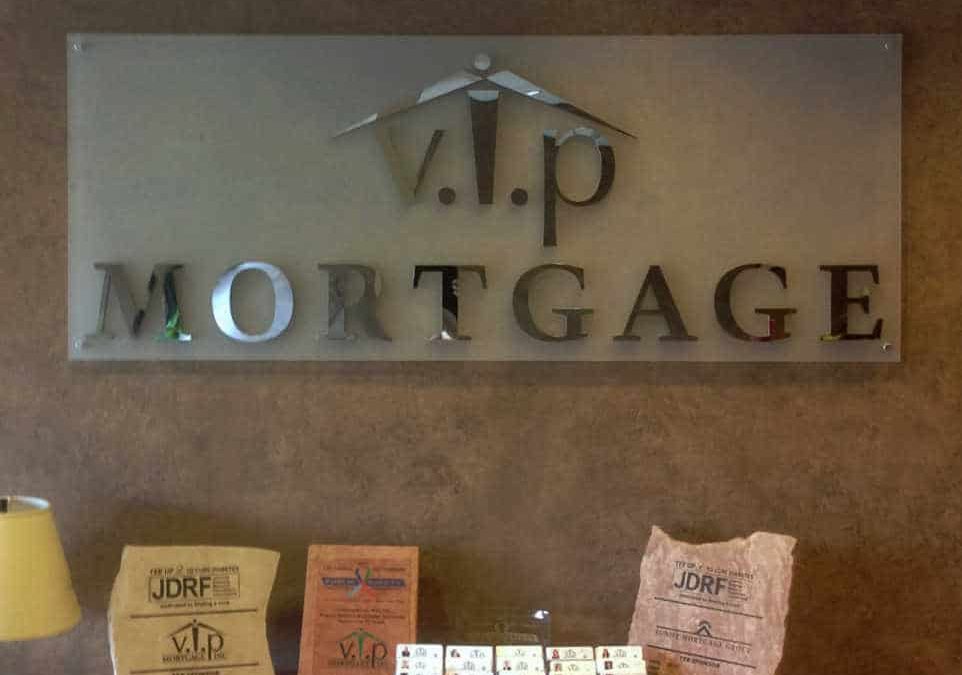
Metal lobby letters are seen at close range, often under lighting that makes fingerprints, dust, and uneven surfaces noticeable. When they begin to look tired, the first request is usually simple: can someone clean them up?
The right answer starts with identifying what is on the wall. A metallic appearance does not tell you the underlying material, coating, or finish. A product intended for one surface may be unsuitable for another, and an apparently dull area may be an intentional finish rather than dirt.
At Addisigns, we build interior signs with a range of materials and finishes. Before you authorize cleaning or refinishing, gather enough information for the sign team to distinguish routine care from work that could change the letters' appearance.
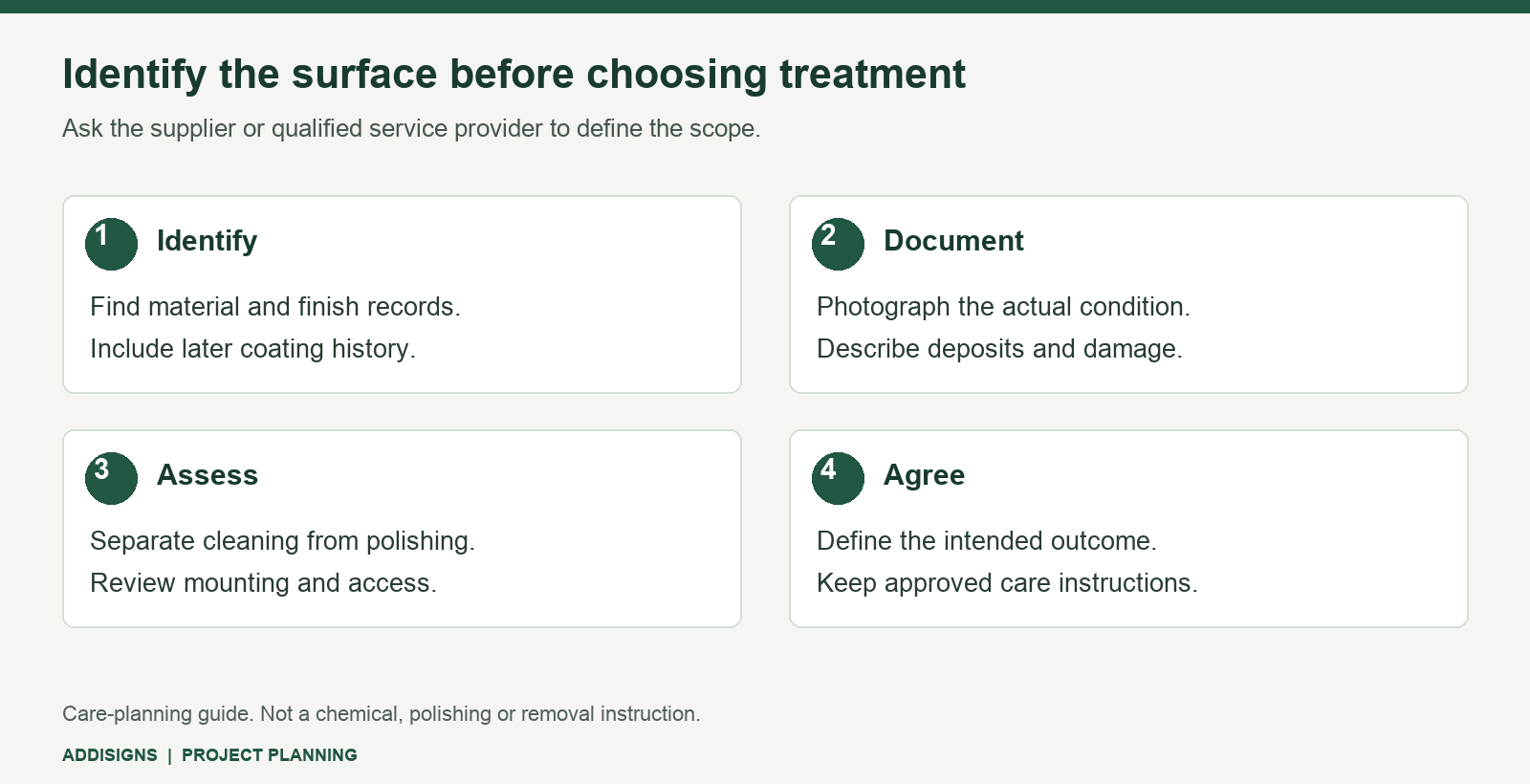
Identify the material and original finish
Look for the original estimate, approved drawing, installation record, or material description. Useful details include the specified metal, whether the finish is brushed or polished, and whether a coating or plating was part of the supplied product. If the records are incomplete, send photographs and ask for an assessment.
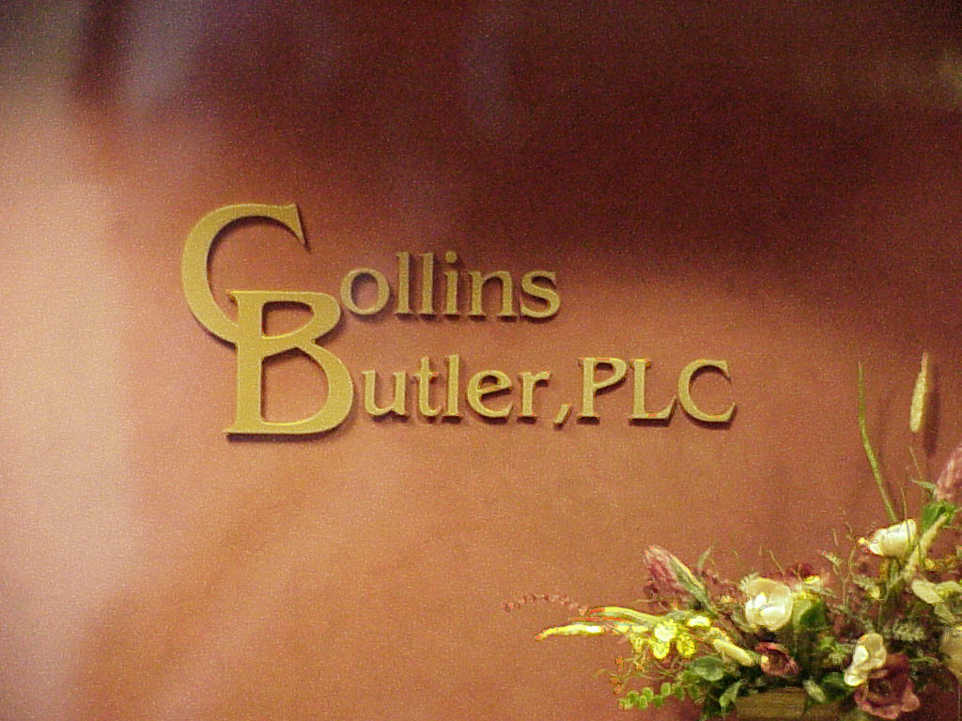
Our interior sign gallery shows the variety possible within lobby lettering. Letters that look similar in a photograph may require different care. Do not assume that a familiar color or sheen identifies a material reliably.
Ask the original supplier for applicable care instructions when available. If someone has previously refinished or coated the letters, include that history. A later treatment may matter as much as the original specification when the team evaluates the surface now present.
Describe the problem before choosing a treatment
Separate what you observe into specific issues. Is there loose dust, a fingerprint pattern, a cloudy patch, scratches, discoloration near the edges, or a difference between letters? Take an overall photograph and several closer views without removing or disturbing the sign.
Note when the change appeared and whether anything nearby changed at the same time. Recent painting, cleaning work, a new reception-lighting arrangement, or a spill may provide useful context. Report those facts without assuming they establish the cause.
Ask what outcome is realistic. Removing surface deposits is a different objective from restoring a damaged coating or changing a finish. A clear description lets the team recommend an appropriate scope instead of being asked to make everything “shiny” when the original appearance may have been deliberately muted.
Understand why polishing needs a separate decision
Cleaning and polishing are different operations. The Canadian Conservation Institute explains that polishing is abrasive and removes some surface material. Its guidance also emphasizes that finishes and coatings can be vulnerable to abrasion or chemical cleaning. These are useful material-care principles, although museum treatment instructions should not be adopted as a maintenance recipe for a commercial sign.
For lobby letters, the practical question is whether a proposed treatment preserves the specified surface. A brushed finish, decorative coating, or thin plated layer should not be treated as if it were an unfinished piece of solid metal.
Do not ask a janitorial team to experiment with household polishes or solvents on an unidentified sign. Obtain a material-appropriate recommendation from the supplier or qualified service provider. The point is to understand the finish before choosing a method that could alter it.
Ask how a test area will be evaluated
If a service provider recommends cleaning or refinishing, ask how suitability will be established before the visible lettering is treated. The appropriate assessment depends on the material, condition, and access. Avoid turning an online suggestion into an improvised test on a prominent letter.
Discuss how the result will be judged under the lobby's normal lighting. A surface may look different when viewed from the reception desk, an entrance, or an angle near a window. Agree on a reasonable review position so the work is evaluated consistently.
If the letters already vary in appearance, document that before work begins. Photographs can record the starting condition, while the service provider explains their limitations for comparing color or sheen. An agreed condition record is more useful than relying on memory after the work is complete.
Consider mounting and the wall behind the letters
Surface care is not the only issue. Loose letters, damaged edges, or work requiring removal introduce questions about the mounting and surrounding wall. Report movement or visible damage rather than treating it as part of routine cleaning.
Ask whether the recommended work can be performed in place or requires removal. If removal is proposed, discuss how the layout will be recorded, how components will be handled, and what wall work may be needed before reinstallation. Do not assume existing mounting points can be reused without assessment.
For illuminated lobby signs, coordinate access and electrical work through the sign team. Keep building staff focused on providing site information and access. The service scope should identify who handles the sign equipment and what will be checked before it returns to normal operation.
Compare care, refinishing, and replacement scopes
Once the condition is understood, ask the team to distinguish the available options. Routine care addresses suitable surface deposits. Refinishing changes or restores a finish through an agreed process. Replacement may be considered when damage, material limitations, or a new design makes the existing letters unsuitable.
Compare those options using the same intended outcome. Ask whether removal, wall protection, finish matching, reinstallation, and any electrical work are included. A price for treating loose letters in a shop is not directly comparable to a complete on-site project.
If one letter needs replacement, discuss its relationship to the remaining set. The objective may be to coordinate with the current appearance or to refresh all the letters together. Make that choice explicitly rather than assuming a new piece will automatically look identical to an aged surface.
Leave the next caretaker useful records
After the work, keep the material description, approved scope, and supplied care instructions with your building records. Tell the cleaning team which products or methods have actually been approved for that sign. Remove outdated instructions so the next staff change does not restart the same uncertainty.
If your lobby letters need attention, send Addisigns clear photographs, the building address, and any original specifications. We can discuss the sign and the appropriate next step. Call 520-748-1540, explore our interior signs, or request a project quote for help defining the work.